The objective of cash collection is not simply to recover overdue invoices: it is to obtain payment on the contractual due date. This is why preventive collection, carried out before an invoice becomes overdue, is one of the most valuable steps in an effective B2B collection process.
Contacting customers in advance gives them time to confirm payment arrangements, identify missing documents and raise any disputes. It also gives the supplier time to resolve problems before they turn into late payments.
Why contact customers before the due date?
A preventive reminder is a commercial and customer-service action, not a demand for an overdue debt. It is designed to ensure that all conditions for timely payment are in place.
- Confirm the expected payment date and method. Ask whether payment is scheduled for the contractual due date and, when useful, obtain a clear commitment.
- Verify payment details. Ensure that the customer has the correct bank details and all the information needed to process payment securely. Changes to bank details should be verified through a trusted, independent channel.
- Identify disputes before they cause delays. An incorrect invoice, missing goods, quality issue or absent purchase order can often be resolved before the due date if identified early enough.
- Demonstrate the seriousness of receivables management. Customers who prioritise payments among their suppliers are more likely to recognise that due dates are actively monitored.
- Detect potential credit risk. A customer unable to confirm a forthcoming payment may be experiencing cash-flow difficulties, especially during periods of economic uncertainty.
Pre-due-date collection is the collection action specifically designed to prevent an invoice from becoming overdue. Once the due date has passed, the company is already managing a delay rather than preventing one.
Early customer contact can also complement traditional credit risk analysis. Credit reports and financial statements are useful, but a customer's response to an imminent payment obligation provides direct operational information.
How to conduct preventive collection
The conversation should remain constructive and straightforward. The aim is to check whether the customer has everything needed to pay, and to remove any obstacle while there is still time.
Four questions are particularly useful:
- Have you received all the invoices and supporting documents?
- Have the invoices been approved for payment? If not, what is preventing approval?
- Can you confirm payment on the agreed due date and specify the payment method?
- Is there any issue with the goods, services, prices or administrative process that we should resolve?
These questions help distinguish an administrative issue from a commercial dispute or an emerging financial difficulty. Each situation calls for a different response. The collector should document the explanation, assign responsibility for any corrective action and follow through before the due date.
Customer satisfaction is fundamental. When the supplier has not fulfilled its contractual commitments, the solution is to resolve the underlying problem, not to multiply payment reminders. See how to manage invoice disputes.
When and how should customers be contacted?
As a practical starting point, make the first preventive contact 7 to 15 days before the invoice due date. This is a management recommendation, not a rigid rule. The timing should reflect the payment term, customer approval process, invoice value and risk profile.
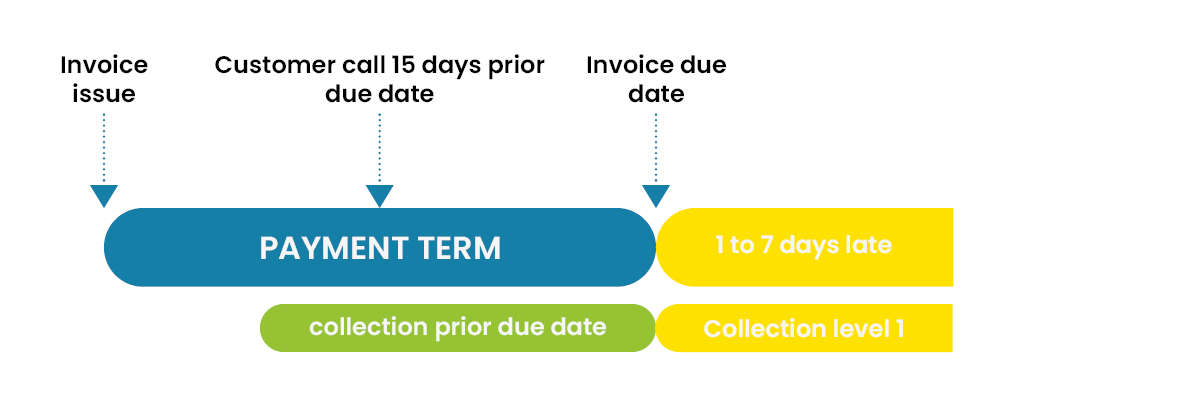
Both telephone calls and emails can be effective. The best channel depends on the customer, the number of invoices, the amount involved and the relationship. A phone call is particularly useful when an invoice is significant, a problem is suspected or direct discussion can speed up resolution. Email is efficient for communicating statements, invoice references and payment information.
For some customers, a sequence of contacts makes sense: an initial email followed by a targeted call if the invoice has not been validated or the payment date remains uncertain. The objective is not to contact everyone repeatedly but to obtain the information and commitments needed for payment.
Interactive emails and digital tools
Interactive emails can make preventive collection substantially more efficient. Rather than asking customers to search for information or reply to a generic reminder, they provide a clear statement of account, invoice copies and simple ways to respond.
A well-designed communication can include:
- The outstanding invoices and their due dates.
- A customer account statement and links to invoice PDFs.
- Options to confirm a payment date or report a dispute.
- A channel for questions and supporting documents.
- Payment options where appropriate.
Example of an interactive email
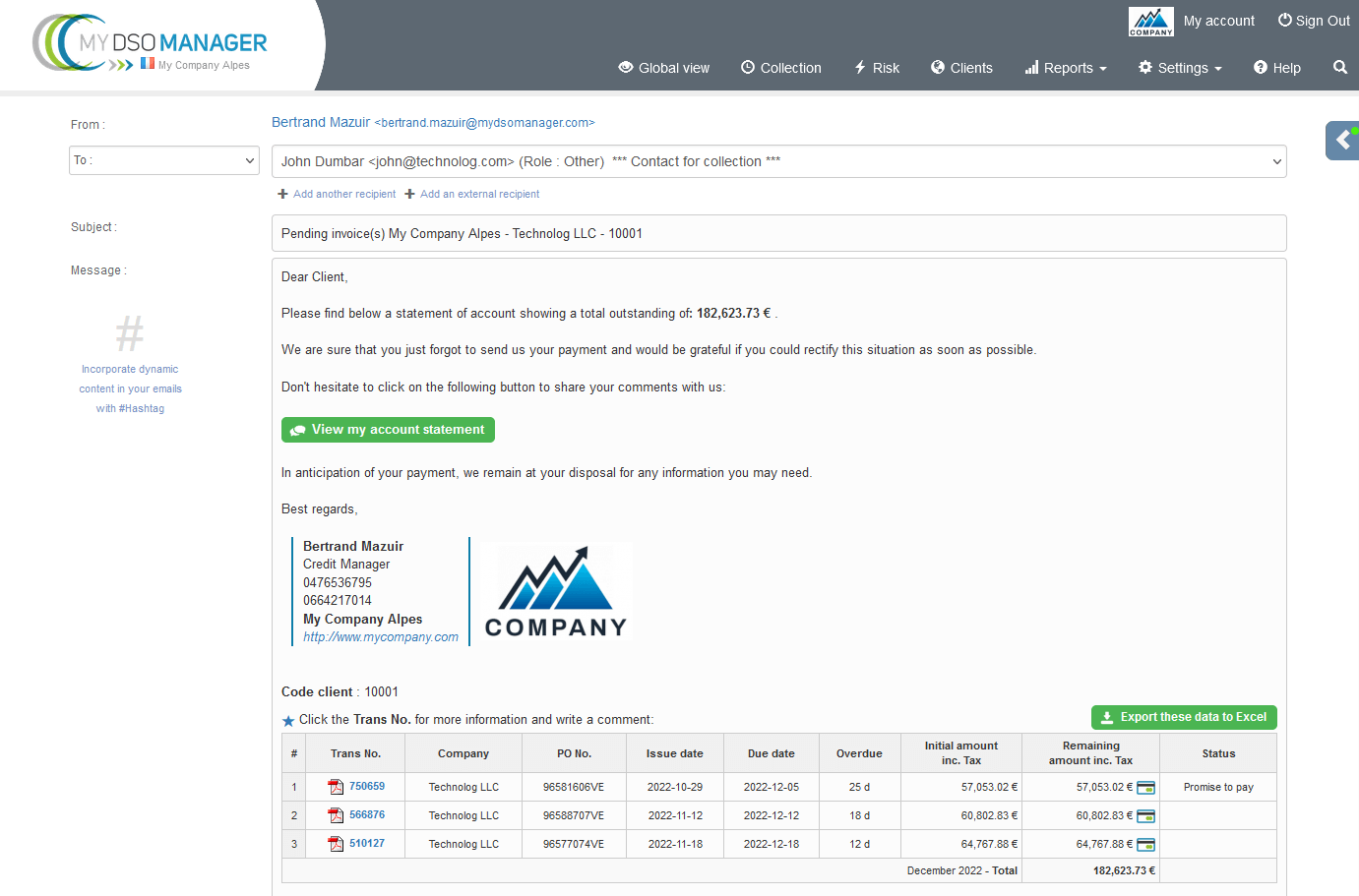
My DSO Manager can schedule preventive reminders, including interactive emails, and collect customers' responses. This allows the team to identify payment commitments, disputes and cash-flow difficulties earlier, while concentrating its efforts on cases requiring professional judgement.
Automation is most valuable when it helps prevent delays and resolve issues. Sending a large volume of irrelevant messages is not a measure of collection performance.
Record payment commitments and verify payment
When a customer confirms that an invoice will be paid, record the promised date, amount, payment method and contact person. Written confirmation is especially useful for significant exposures or customers with a history of missed commitments.
A written promise to pay may provide useful evidence of the customer's position, but it should not automatically be treated as a legally effective acknowledgment of debt in every jurisdiction or circumstance. Its legal significance depends on its wording and the applicable law.
If the customer says that payment has already been made, request the payment reference or supporting evidence when needed, then verify the receipt and allocation in the company's bank and accounting records. A payment instruction or transfer confirmation is not always proof that funds have been received.
If payment is not received on the due date, the information collected beforehand makes the next action more relevant and effective. The process then moves to collection level 1, in accordance with the company's collection scenario.
Conclusion
Preventive collection is not about asking customers to pay early. It is about making sure they can and will pay on time. By checking invoice approval, resolving disputes and obtaining reliable commitments before the due date, Credit Managers improve cash flow while maintaining a professional, constructive customer relationship.


