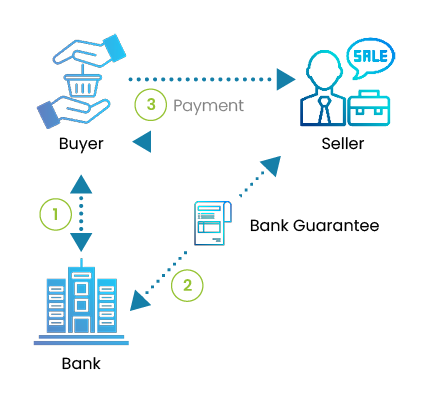
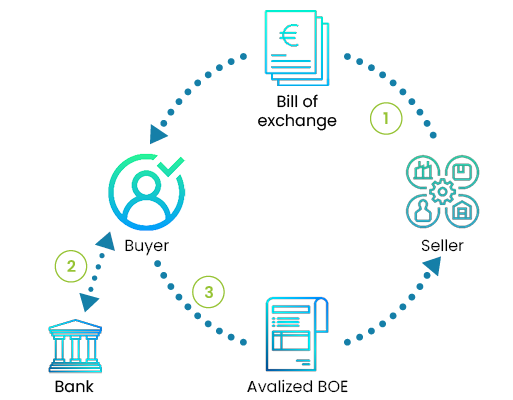
A bank guarantee can help a supplier extend commercial payment terms while reducing exposure to customer default. Its effectiveness depends on the issuing bank, the wording of the undertaking and the conditions for making a valid demand. An on-demand bank guarantee is an undertaking issued by a bank in favour of a beneficiary, usually the supplier, to pay up to a specified amount when a complying demand is presented. It can provide strong protection against non-payment without requiring the customer to pay for every delivery in advance. Unlike a simple promise from the customer, the supplier has a direct claim against the issuing bank under the terms of the guarantee. However, payment is not necessarily automatic upon sending a registered letter: the demand must meet the guarantee's documentary, timing and presentation requirements. On-demand guarantees may be particularly useful for recurring domestic sales. For cross-border transactions, a standby letter of credit (SBLC) is another commonly used bank undertaking. Depending on the instrument, rules such as URDG 758 or ISP98 may apply when expressly incorporated. The fee depends on the bank, the applicant's financial position, the duration, the amount and any collateral. It is therefore better to obtain a quotation than to assume a fixed annual rate. A bank's refusal to issue a guarantee is not proof of customer insolvency. It may reflect internal credit policies, collateral requirements, exposure limits or commercial considerations. Nevertheless, it is a signal worth investigating. Where commercially appropriate, the supplier may offer to share the guarantee fee to facilitate negotiations. The allocation of costs should be agreed in advance. For high-value or cross-border transactions, obtain appropriate legal and banking review before relying on the instrument. A bank-avalised bill of exchange is a bill supported by a bank's aval, subject to the law applicable to the instrument. The bank's undertaking is tied to the bill rather than to a separate guarantee. It can strengthen the seller's payment security and, where accepted by a financial institution, may facilitate discounting before maturity. Unlike a revolving guarantee covering multiple invoices, each bill generally needs its own properly established aval. Cheques backed or certified by a bank may provide additional assurance in jurisdictions where they are available. Their legal effects, validity periods and collection rules vary by country. A bank cheque (cashier's cheque) is issued by the bank itself, but counterfeiting and verification risks remain. Do not treat any cheque as an unconditional guarantee of final payment. Because cheque-based instruments are less common in many B2B payment environments, confirm their practical availability and legal treatment locally. For international trade, an SBLC can secure payment while allowing the buyer to pay by ordinary bank transfer. The beneficiary calls on the standby only if the stated conditions are satisfied. Whatever the instrument, the credit manager should align the security with the customer's credit limit, the payment terms and the nature of the commercial relationship. Other solutions may also be relevant, including a parent company guarantee, receivables security measures or factoring, depending on the transaction and the risks to be covered.Bank Guarantees: How to Secure B2B Payments
1. On-demand bank guarantees
2. How a bank guarantee works
3. What to check before accepting a guarantee
Check
Why it matters
Issuing bank and jurisdiction
Assess the bank's credit quality, applicable law and any transfer or country restrictions.
Beneficiary and applicant
Ensure the legal entities are correctly identified.
Maximum amount and currency
Check that the guarantee covers the intended exposure, including any agreed accessories.
Expiry and reduction clauses
Allow sufficient time to identify non-payment and present a demand.
Demand wording and documents
Avoid impractical conditions, ambiguous evidence requirements and unnecessary dependence on the customer's consent.
Governing rules and authentication
Confirm the applicable framework and verify the instrument through reliable banking channels.
4. Other bank-backed payment instruments
Bank-avalised bill of exchange
Bank-guaranteed or certified cheque
Standby letter of credit
5. Choosing the right protection
Instrument
Typical use
Main consideration
On-demand bank guarantee
Recurring or significant domestic or international B2B exposures
Demand conditions, issuer risk and expiry
Standby letter of credit
Cross-border sales and recurring trade flows
Documentary compliance and applicable rules
Bank-avalised bill of exchange
Specific deferred-payment transactions
Correct aval and bill formalities
Bank cheque
Specific one-off transactions where locally appropriate
Authenticity and final collection

