Electronic invoicing and collections: how to adapt your practices step by step
Electronic invoicing reform is a legal requirement for all VAT-liable businesses to comply with a new way of generating and transmitting invoices.Any invoice sent in paper format, PDF or otherwise will no longer comply with regulations.
This major evolution in B2B relationships fundamentally changes how companies communicate, through structured data, and therefore how they manage accounts receivable collection. We can expect that, thanks to smoother exchanges between platforms, electronic invoicing will improve collections by accelerating processing times, reducing disputes, and enabling real-time invoice tracking. For credit management and collections teams, this means rethinking their methods and tools. Here is how to proceed in practice.
What is electronic invoicing?
Electronic invoicing timeline
Electronic invoicing reform comes into force from 2026, requiring each company to choose its Certified Platform (PA) to receive invoices in authorized formats (UBL, CII, Factur-X, etc.), and then to issue them.- September 1, 2026 : “mandatory issuance of electronic invoices and e-reporting for large companies and mid-sized enterprises. Mandatory reception of electronic invoices for all companies.”
- September 1, 2027 : “mandatory issuance of electronic invoices and e-reporting for medium, small, and micro-enterprises at the latest.”
Step 1: understand the new invoice lifecycle
Unlike a PDF invoice sent by email, an electronic invoice is part of a structured process. It goes through several stages: issuance, transmission, reception, validation or rejection, and then payment. This evolution changes how receivables are managed. Teams no longer work solely with an issue date and a due date, but with much more frequent and precise tracking information. The first step is therefore to integrate this new logic into internal processes: an invoice can be received without being validated, rejected before due date, or blocked for administrative reasons.
The multiplication of statuses throughout the invoice lifecycle, combined with faster exchanges, necessarily requires appropriate tools. Indeed, traditional receivables management using ERP, Outlook, and Excel is becoming increasingly obsolete, if not impossible to maintain.
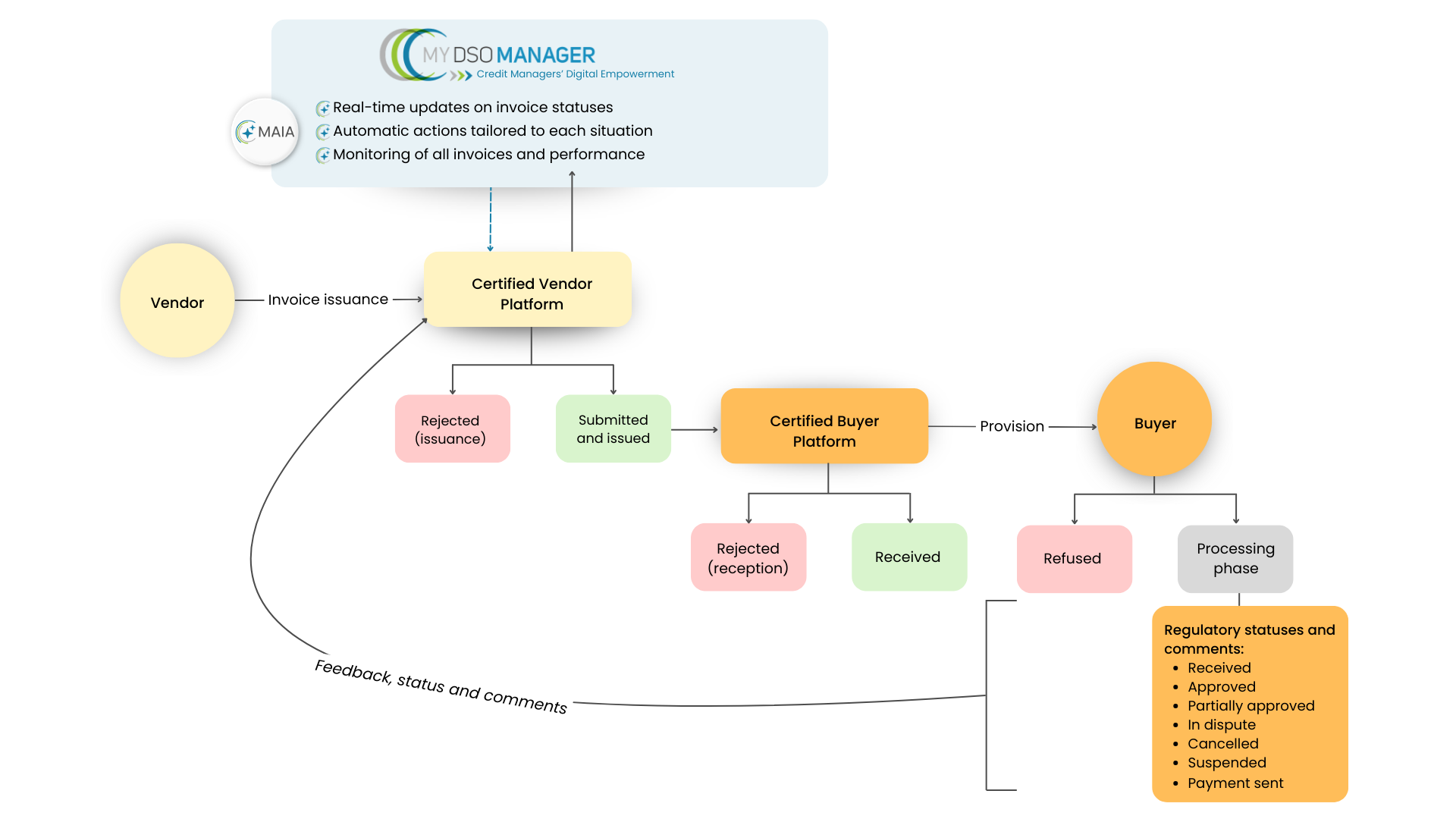
Electronic invoicing diagram with a collections software
Interactions between customers are becoming increasingly digital with electronic invoicing, creating system continuity between sellers and buyers. Accounts receivable collection fits into this logic and becomes, above all, a matter of interconnecting information systems.Indeed, access to information, its processing, and exchanges with customers take place through this system architecture:
Step 2: trigger reminders at the right time
In many companies, reminders are still automatically triggered based on the due date. With electronic invoicing, this approach quickly becomes insufficient, as invoices can be blocked as soon as they are transmitted. Electronic invoicing improves collections in three ways:- faster invoice delivery
- reduction of errors and disputes handled earlier
- real-time payment tracking
- rejected invoice: priority correction
- received but not validated invoice: wait and monitor
- validated invoice: appropriate follow-up
- invoice in payment: monitoring rather than aggressive reminders
Step 3: leverage data from platforms
Electronic invoicing platforms are not only used to transmit invoices. They also help quickly identify rejection reasons, customer comments, or administrative blocks. This information must be integrated into receivables monitoring to avoid wasted time and unnecessary follow-ups. The objective is simple: centralize issues, quickly qualify them, and direct teams toward the right action.To achieve this, using appropriate tools capable of automatically and dynamically retrieving this information is essential.
Step 4: handle disputes earlier
One of the most tangible benefits of electronic invoicing is improved data quality. Structured formats and automated controls reduce entry errors, omissions, and inconsistencies. This reliability has a direct impact on collections: disputes are identified earlier, often even before the due date, enabling faster resolution. By reducing administrative bottlenecks, companies mechanically shorten their collection cycles and can more easily reduce DSO.Step 5: prioritize collection actions
Not all invoices have the same level of urgency. With better visibility into their status, it becomes possible to prioritize actions and focus efforts where they will have the greatest impact. Priorities generally include:- validated and overdue invoices
- invoices close to due date
- blocked or rejected invoices
- customers with recurring late payment risk
Step 6: rethink reminder automation
Automation in collections remains a useful lever, but it must be revisited. It is no longer just about sending reminders at fixed intervals, but triggering the right scenarios at the right time. Some simple rules can be implemented:- automatic reminder only if the invoice is validated
- suspension of reminders in case of dispute
- internal alert in case of rejection
- differentiated reminders based on status or risk level
Step 7: anticipate the electronic invoicing reform
The French electronic invoicing reform will gradually impose new standards on all companies. Beyond regulatory compliance, it accelerates the digitalization of exchanges and the standardization of processes. Ultimately, companies will need to deal with more structured flows, faster data availability, and increased management requirements. Those that anticipate this transformation now will be better equipped to secure their cash inflows, gain visibility over cash, and streamline receivables management.Key takeaways
Once appropriate tools and practices are in place:- Electronic invoicing accelerates processing times
- It reduces disputes and invoicing errors
- It improves visibility over receivables, cash, and DSO
- It enables more targeted and responsive collections
- Reminders should be driven by statuses, not only dates